The Cheloniidae are a sea turtle family.
This family is made up of three species, which are: the green turtle, the hawksbill turtle and the flatback turtle.
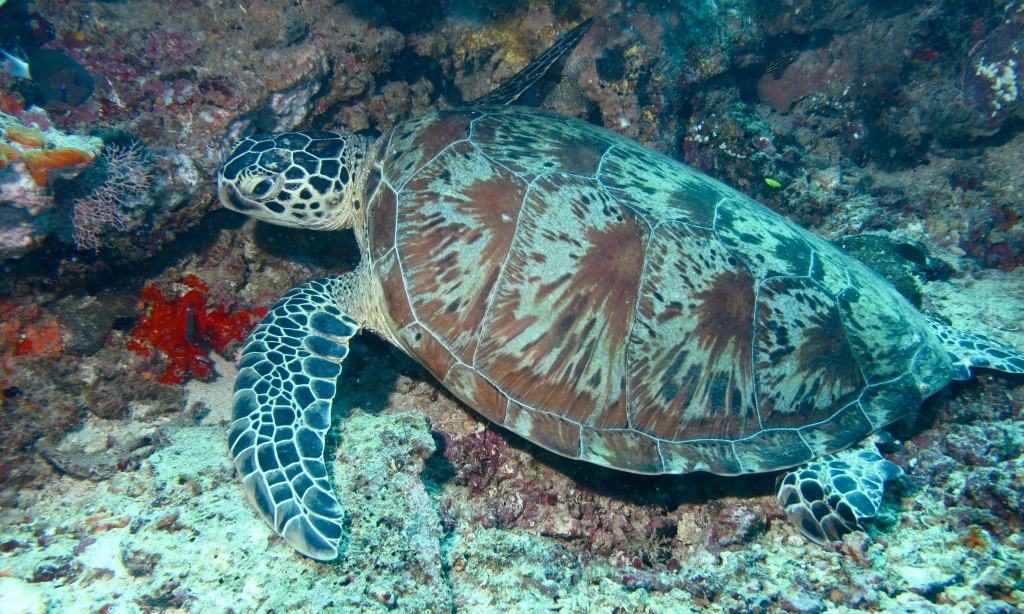
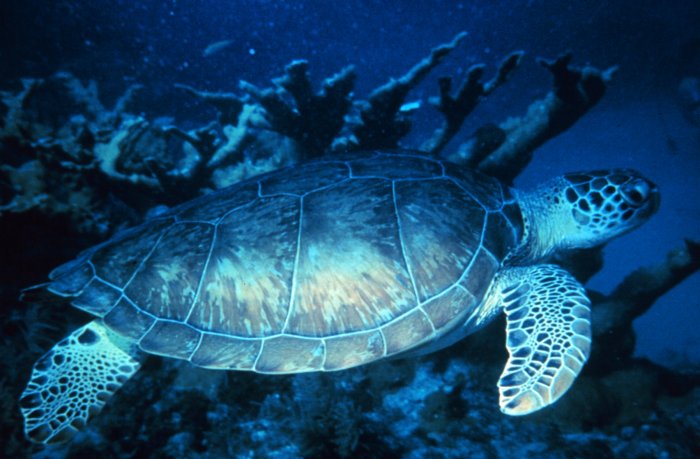
The Green Turtle
- STATUS Endangered
- SCIENTIFIC NAME Chelonia mydas
- WEIGHT 150-400 pounds
- LENGTH 31-47 inches
- HABITATS Oceans
The green turtle is one of the largest sea turtles and the only herbivore among the different species. Green turtles are in fact named for the greenish color of their cartilage and fat, not their shells. In the Eastern Pacific, a group of green turtles that have darker shells are called black turtles by the local community. Green turtles are found mainly in tropical and subtropical waters. Like other sea turtles, they migrate long distances between feeding grounds and the beaches from where they hatched. Classified as endangered, green turtles are threatened by overharvesting of their eggs, hunting of adults, being caught in fishing gear and loss of nesting beach sites.
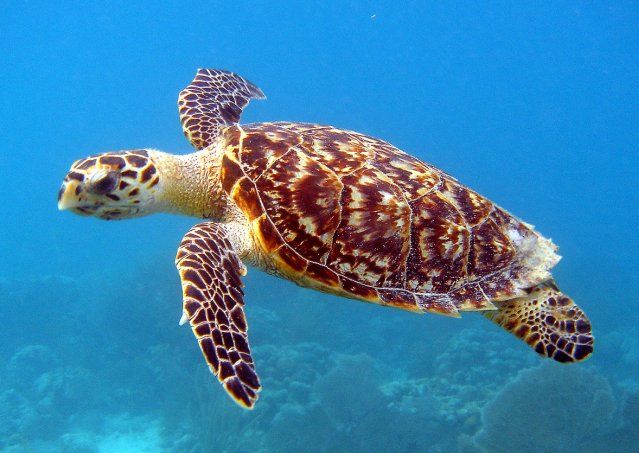
Hawksbill Turtle
- STATUS Critically Endangered
- SCIENTIFIC NAME Eretmochelys imbricata
- WEIGHT 90-150 pounds
- LENGTH 30-35 inches
- HABITATS Oceans
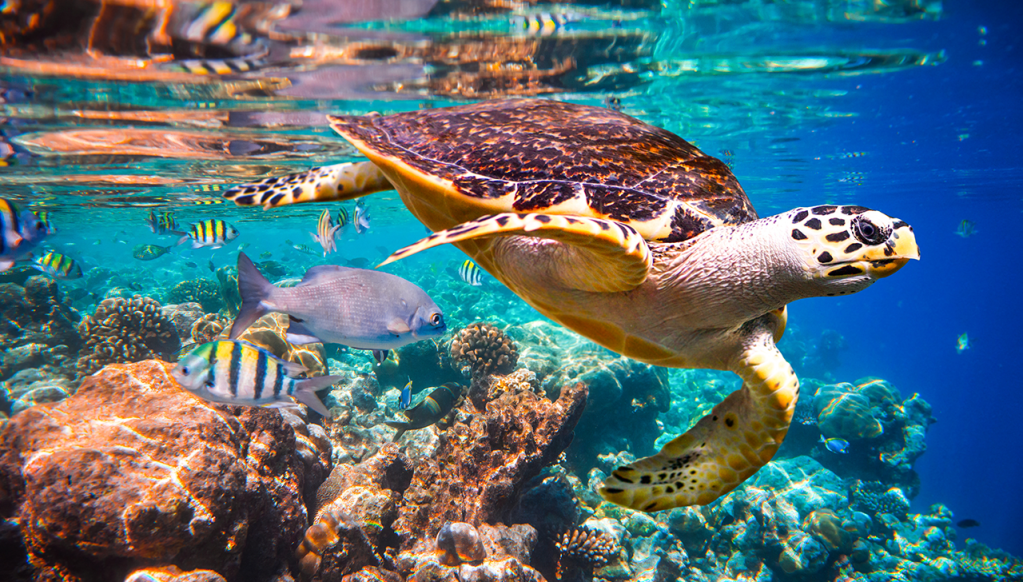
Hawksbills are named for their narrow, pointed beak. They also have a distinctive pattern of overlapping scales on their shells that form a serrated-look on the edges. These colored and patterned shells make them highly-valuable and commonly sold as “tortoiseshell” in markets.
Hawksbills are found mainly throughout the world’s tropical oceans, predominantly in coral reefs. They feed mainly on sponges by using their narrow pointed beaks to extract them from crevices on the reef, but also eat sea anemones and jellyfish. Sea turtles are the living representatives of a group of reptiles that has existed on Earth and travelled our seas for the last 100 million years. They are a fundamental link in marine ecosystems and help maintain the health of coral reefs and sea grass beds.
Flatback Turtle
- STATUS Critically Endangered
- SCIENTIFIC NAME Natator depressus
- LENGTH 30 – 38 ft.
- HABITATS Waters of the Australian continent
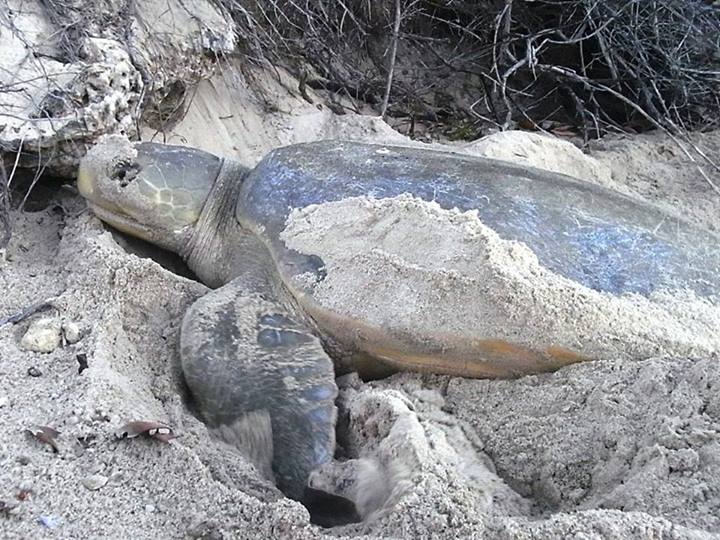
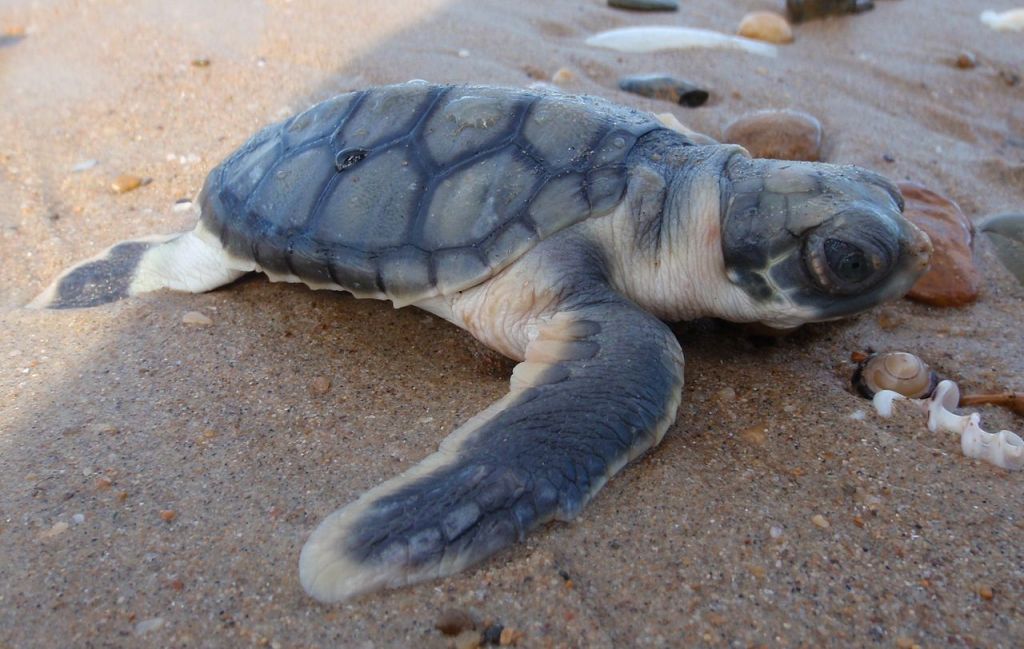
The flatback turtle is named after its flat carapace, or shell, which is unlike the curved shell of other sea turtle species. The carapace is pale grayish-green in color with the outer margins distinctly upturned. An adult flatback weighs 200 pounds and is approximately 3 feet in length. They have the smallest distribution of all the species and breed and nest only in Australia.
DID YOU KNOW?
Flatbacks are preyed upon by Saltwater crocodiles, the largest reptile on earth. Adult females have been observed being attacked by crocs while attempting to nest.Despite its small range and non-migratory behavior, until now this has been the least studied of the sea turtle species, perhaps due in part to the remoteness of much of their habitat.
¿ WHY THEY MATTER ?
Sea turtles are a fundamental link in marine ecosystems. They help maintain the health of seagrass beds and coral reefs that benefit commercially valuable species such as shrimp, lobster, and tuna. Sea turtles are the live representatives of a group of reptiles that have existed on Earth and traveled our seas for the last 100 million years. Turtles have major cultural significance and tourism value. Five of the seven species are found around the world, mainly in tropical and subtropical waters. The remaining two species, though, have relatively restricted ranges: Kemp’s ridley is found mainly in the Gulf of Mexico and the flatback turtle around northern Australia and southern Papua New Guinea.
 Cheloniidae Family